One Good Ear's Digital 🌍 World
Streaming products are everywhere and we are relying more & more on networks to provide our home entertainment.
We can now control most of, if not all of our home from a hand-held device... Simple, reliable and convenient!

What sounds better: analog or digital recordings?
This long debate still rages among audiophiles.
- Digital recording do have advantages: Digital files will not decay or corrupt in the way that analog media do
- You can also make unlimited copies of a digital file without sacrificing fidelity of the sound.


Digital audio, as with every form of digital media, is undoubtedly more versatile than its analog counterpart.
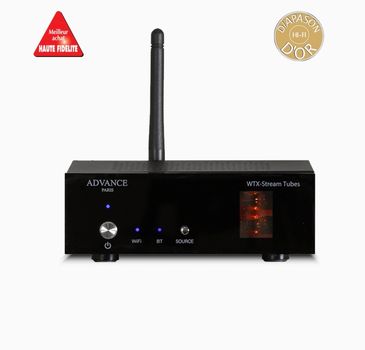
While analog audio files are only played on tape decks and Turntables, digital files can be stored and played in many different ways—from compact CDs and dedicated CD players to today’s portable mp3 players and media hosting websites where anybody can stream or download the audio.

This explains the proliferation of digital music and the significant decrease of analog recordings in recent years, although there is still a humble market for vintage tapes and vinyl records.



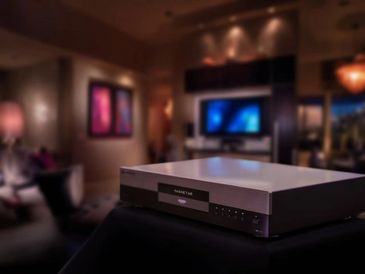
Magnetar
Digital Products
The Brands/Products


Audience Cables
Audio cables are often referred to as accessories. However, an audio system cannot make sound without cables installed which implies that they are essential components.

Much like the other components in the system, cables must be chosen with the same research that one would perform in choosing an amplifier, a speaker or a turntable.

Characteristics such as coloration, distortion and other anomalies must be minimized in order for the system to perform at its optimum.



COMPUTER AUDIO DESIGN (CAD)

GROUND CONTROL GC1.1
"The best hi-fi of 2023’ is a collection of products that audiophile webzine The Ear’s reviewers consider to be the very finest they’ve enjoyed over the year. Among them is Computer Audio Design’s (CAD) GC 1.1 Ground Control unit, “an essential audition for anyone with a half-decent system”. But, buyer beware: once you’ve heard how yo
"The best hi-fi of 2023’ is a collection of products that audiophile webzine The Ear’s reviewers consider to be the very finest they’ve enjoyed over the year. Among them is Computer Audio Design’s (CAD) GC 1.1 Ground Control unit, “an essential audition for anyone with a half-decent system”. But, buyer beware: once you’ve heard how your system sounds without the detrimental effects of high-frequency noise, there may be no going back!"
https://the-ear.net/review-hardware/best-hi-fi-of-2023/

The CAD Ground Controls Less noise. More Music.

GROUND CONTROL GC3.1
"The CAD Ground Control units are demonstrably effective, neat and easy to work with. They will significantly improve just about any serious system, but their real beauty is that the more compromised the AC and grounding installation, the greater the potential improvement they represent. I consider them indispensable."
-Roy Gregory "THE A
"The CAD Ground Control units are demonstrably effective, neat and easy to work with. They will significantly improve just about any serious system, but their real beauty is that the more compromised the AC and grounding installation, the greater the potential improvement they represent. I consider them indispensable."
-Roy Gregory "THE AUDIO BEAT"
https://www.computeraudiodesign.com/The_Audio_Beat_GC_Review_LR.pdf

GROUND CONTROL GC-R
"...Listening to the effect of the CAD devices prompted thoughts of David Bowie singing, “Ground Control to Major Tom/You’ve made the grade.” Upon inserting the CAD into your system, you may well feel the same way."
-Jacob Heilbrunn "The Abso!ute Sound"
https://www.theabsolutesound.com/articles/cad-gc1-1-and-gc-r-reference-ground-control/

USB CONTROL
“Sounds had more purpose and musical intent, and there was a sense of snap and drive to the musical performance.”
“Yes, they help bring out detail that might be hiding below the noise floor, and yes they help make the soundstage seem larger and more open. They even make the sound more dynamic and expressive. But more significantly, they
“Sounds had more purpose and musical intent, and there was a sense of snap and drive to the musical performance.”
“Yes, they help bring out detail that might be hiding below the noise floor, and yes they help make the soundstage seem larger and more open. They even make the sound more dynamic and expressive. But more significantly, they tie the sound together like it was meant to sound.”
“Once again, the USB Control devices improve the system’s ability to convey musical themes and improve the overall communication between musician and listener.”
https://www.computeraudiodesign.com/wp-content/uploads/2024/04/hi-fiUSB_Control_2024.pdf
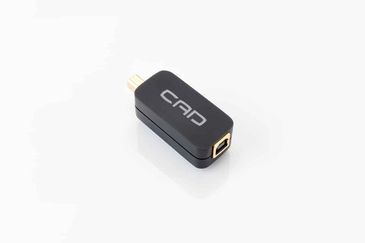
USB IN-LINE FILTER
Digital audio source components – from servers to streamers, CD transports to laptops, are real noise polluters in an audio system. Their CPUs, chipsets, switch mode power supplies, regulators and the like produce considerably more high frequency ‘noise’ than any analogue component. To stop this unwanted noise from degrading your syst
Digital audio source components – from servers to streamers, CD transports to laptops, are real noise polluters in an audio system. Their CPUs, chipsets, switch mode power supplies, regulators and the like produce considerably more high frequency ‘noise’ than any analogue component. To stop this unwanted noise from degrading your system’s overall performance, you need to tackle it before it reaches the analogue stage.
The CAD USB filter is designed to filter out this noise from digital music sources before that noise can reach the digital to analogue converter (DAC).
The CAD USB Filter simply plugs directly into a DAC/Streamer USB audio input and can be used with any USB cable.
The USB Filter is a B end filter: with one female and one male B-type connector. This places the filter as close as possible to the DAC/Streamer.
The CAD USB Filter delivers similar characteristics as the CAD USB II-R cable, offering more clarity across all frequencies, larger soundstage with greater speed, and improved timing and rhythm.
USB II-R CABLE
The CAD USB II-R Cable was awarded the USB Cable of 2023 by HiFi+ Magazine! Read here: HiFi+ Awards
"The USB II-R is now the cable that can preserve the most authentic account of the music so far, acting almost like an analogue conduit from PC to DAC. Against any known contender, this winner takes them all."
The CAD USB II-R Cable was awarded the USB Cable of 2023 by HiFi+ Magazine! Read here: HiFi+ Awards
"The USB II-R is now the cable that can preserve the most authentic account of the music so far, acting almost like an analogue conduit from PC to DAC. Against any known contender, this winner takes them all."
https://www.computeraudiodesign.com/wp-content/uploads/2023/03/HiFi_CAD_USB_II-R_Cable.pdf
“I made a number of comparisons with reference cables and came to the conclusion that CAD USB II-R is one of the most natural and effortless digital connections available to the streaming enthusiast”
Jason Kennedy – Editor, The Ear – June 2023
https://the-ear.net/review-hardware/cad-drops-the-noise-with-usb-ii-r/

ETHERNET CONTROL(CAT-7)
The CAD Ethernet Control is designed to reduce unwanted high frequency noise on the Ethernet Network connection in audio and video equipment and will work with both streaming services (Spotify, TIDAL, Qobuz, etc.) and locally stored music files.
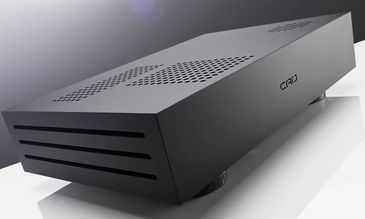
1543 MKIII DAC
1543 MKIII DAC
The 1543 MKII DAC is optimized to work with a computer or audio server. There is one USB input and one set of unbalanced RCA outputs.
The 1543 MKII DAC is “Plug & Play” and will work with almost any audio server on the market, including: Innuos, Auralic, Melco, Aurender, Antipodes and Fidata.
- DAC chips are isolated from the USB input
- Async
The 1543 MKII DAC is optimized to work with a computer or audio server. There is one USB input and one set of unbalanced RCA outputs.
The 1543 MKII DAC is “Plug & Play” and will work with almost any audio server on the market, including: Innuos, Auralic, Melco, Aurender, Antipodes and Fidata.
- DAC chips are isolated from the USB input
- Asynchronous USB input
With a normal USB (either synchronous or adaptive) input the data is sent by the computer using the computer’s clock. The DAC must extract the data when the computer sends it. A serious issue with this process relates to a type of digital distortion called jitter. Computers have high amounts of jitter and we believe jitter is a major cause of poor sound quality.
With Asynchronous USB input the DAC receives the data from the computer and then using its own clocks the data is sent on to the next stage in the DAC .
We use custom fixed frequency oscillators in our DAC. We supply these oscillators with power supplies that we have developed to achieve the best sound quality possible.
MAGNETAR
UDP800 MKII
Roon Ready In Certification
Newly Redesigned 2.0 Audio Boards With Seven OPA1602 Op-Amps
TMDS Retiming On HDMI Audio Port
Enhanced USB 3.0 System With Isolated Power
Upgraded Copper Wiring And Amphenol/JST Connectors
Control 4 Support
Crestron Support
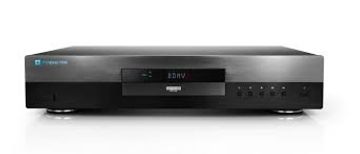
UDP800 MKII – 4K UHD Blu-Ray Player
High-quality copper
Roon Ready In Certification
Newly Redesigned 2.0 Audio Boards With Seven OPA1602 Op-Amps
TMDS Retiming On HDMI Audio Port
Enhanced USB 3.0 System With Isolated Power
Upgraded Copper Wiring And Amphenol/JST Connectors
Control 4 Support
Crestron Support
UDP800 MKII – 4K UHD Blu-Ray Player
High-quality copper-core wires are used throughout the device, the in-machine PCB connectors have been upgraded to JST and
Amphenol brands, enhancing the stability and reliability of the connections. Adding the TMDS retiming function to the
mainboard’s HDMI AUDIO port, which can effectively compensate for random jitter, provide better signal quality and load-
carrying capacity, and further improve the HDMI audio quality, making the sound details richer. Adding a USB3.0 HUB chip and
redesign the USB3.0 power supply to improve the compatibility and stability of the USB3.0 port, so as to better adapt to USB
flash drives and hard drives. The optimization also enhances the stability of data transmission and increases the transmission
speed, thus achieving better sound and picture effects. Replacing the operational amplifiers with seven OPA1602s. Its low noise
reduces audio distortion for clearer sound. High precision ensures accurate signal reproduction, creating audiophile-grade sound.
Roon Ready in certification. Newly redesigned 2.0 audio boards with seven OPA1602 op-amps. TMDS retiming on HDMI audio port.
Enhanced USB 3.0 system with isolated power. Upgraded copper wiring and Amphenol/JST connectors.
UDP900 MKII – 4K UHD Blu-Ray Player
UDP900 MKII – 4K UHD Blu-Ray Player
High-quality copper-core wires are used throughout the device, the in-machine PCB connectors have been upgraded to JST and
Amphenol brands, enhancing the stability and reliability of the connections. The ESS9038PRO D/A decoder offers stereo and
multi-channel outputs. With XMOS USB Audio input capable of handling PCM768 and DSD512, UDP90
High-quality copper-core wires are used throughout the device, the in-machine PCB connectors have been upgraded to JST and
Amphenol brands, enhancing the stability and reliability of the connections. The ESS9038PRO D/A decoder offers stereo and
multi-channel outputs. With XMOS USB Audio input capable of handling PCM768 and DSD512, UDP900 MKII offers premium audio
output. The TMDS retiming function on the HDMI AUDIO port also refines audio quality. Adding a USB3.0 HUB chip and redesign
the USB3.0 power supply to improve the compatibility and stability of the USB3.0 port, so as to better adapt to USB flash drives
and hard drives. Also enhances the stability of data transmission and increases the transmission speed, thus achieving better
sound and picture effects. Upgrade USB AUDIO to PCM768 and DSD512, greatly improve the audio data transmission and
processing capabilities, and provide higher-quality audio output. Roon Ready in certification. Fully Redesigned Audio utilizing
dual ESS9038PRO DAC’s. TMDS retiming on HDMI audio port. Enhanced USB 3.0 system with isolated power. XMOS supports
PCM768/512 DSD. Upgraded copper wiring and Amphenol/JST connectors. Control 4 Support. Crestron Support. Wake-Up On Lan
